
When Does a Boat Need Polishing Instead of Wax?
Wax protects a boat’s finish. Polishing improves the finish. If your boat is dull, chalky, oxidized, faded, or still looks bad after washing, wax is probably not enough.
The honest answer: wax protects, polishing corrects
A boat needs polishing instead of wax when the gelcoat or painted surface is already dull, oxidized, chalky, faded, stained, or lacking gloss. Wax can add protection and temporary shine, but it does not properly fix surface defects.
This is one of the biggest misunderstandings in boat care. A lot of owners ask for wax when what they actually need is polishing first. Wax is not a magic eraser. If the surface is damaged, oxidized, or dull, wax is just sitting on top of the problem.
If the boat still looks dull after being washed, it probably needs polishing before wax or ceramic protection makes sense.
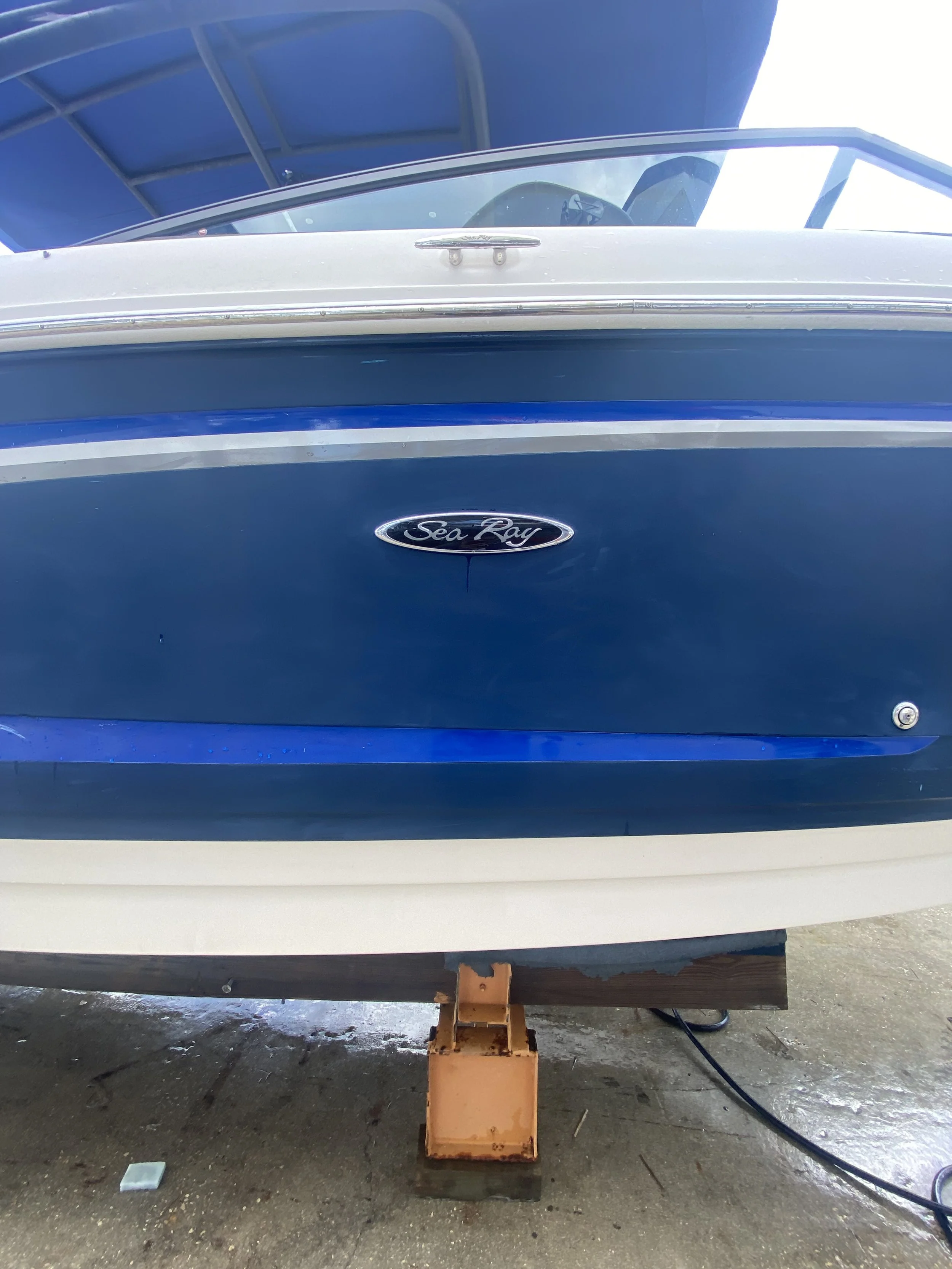
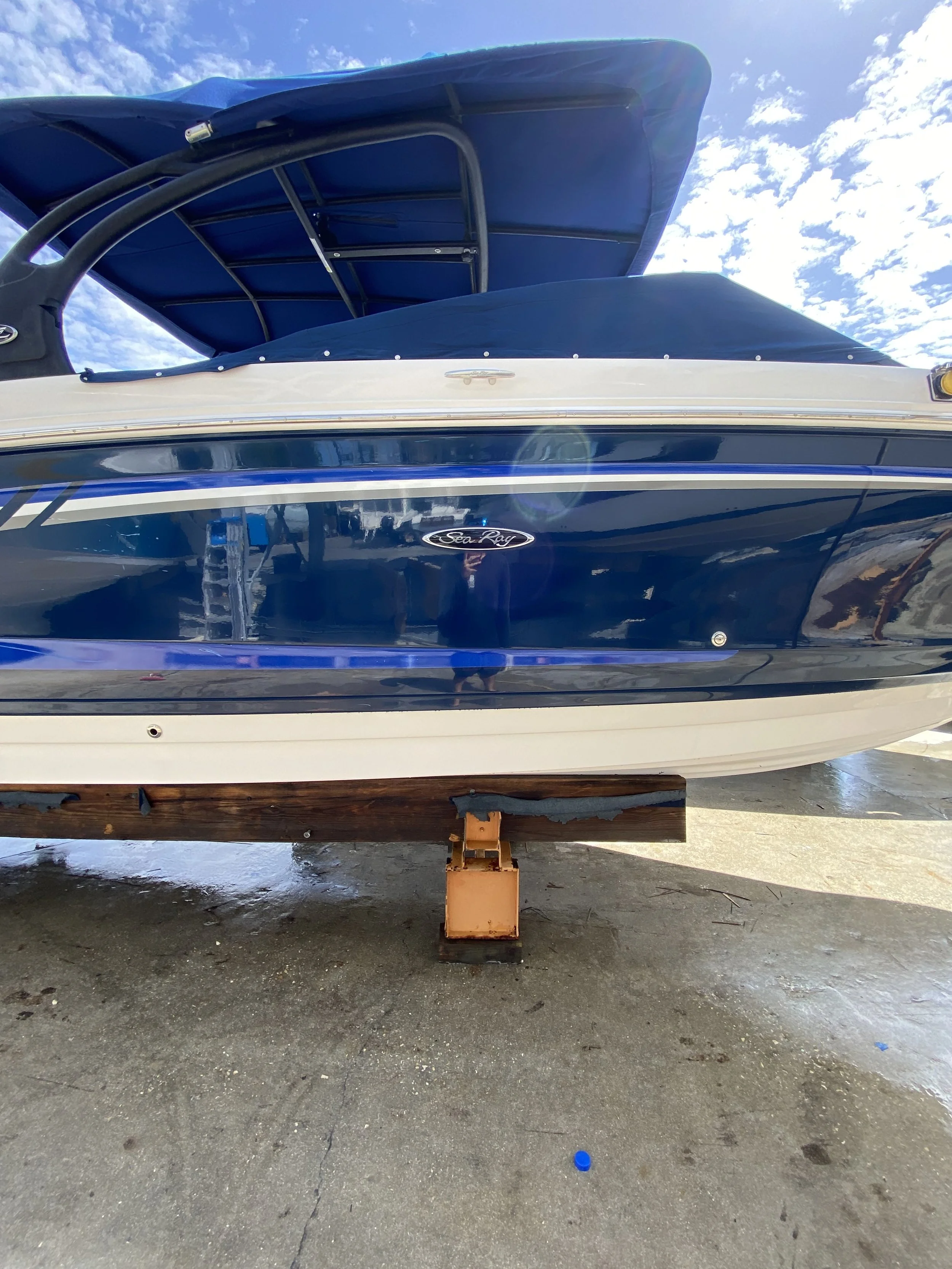
What wax actually does
Wax is a protection step. It can add shine, slickness, and a temporary protective layer to the surface. It works best when the surface underneath is already clean, polished, and in good condition.
Wax is not designed to remove heavy oxidation, restore dead gelcoat, fix deep staining, or correct a surface that has already lost its gloss.
Wax is useful for:
- Adding short-term protection
- Helping water bead temporarily
- Improving slickness
- Maintaining an already clean surface
- Protecting after polishing
Wax is not enough for:
- Heavy oxidation
- Chalky gelcoat
- Dead or faded color
- Surfaces that do not shine after washing
- Neglected boats that need correction
Waxing over oxidation is like putting a clean shirt over a dirty body. It might look slightly better for a short time, but the actual issue is still underneath.
What polishing actually does
Polishing improves the surface itself. Depending on the product, pad, machine, and process used, polishing can help remove oxidation, improve color, restore gloss, reduce dullness, and refine the finish.
Polishing is the step that makes the boat look better before protection is applied. Wax, sealant, ceramic wax, or ceramic coating should come after the surface has been cleaned and corrected.
Polishing can help with:
- Dull gelcoat
- Light to moderate oxidation
- Faded color
- Loss of gloss
- Chalky appearance
- Uneven shine
- Surface refinement before protection
Severe oxidation may need more aggressive correction before finishing polish. That is why not every detail is the same. The right process depends on the condition of the boat.
Signs your boat needs polishing instead of wax
The easiest test is simple: wash the boat and look at the surface. If the boat still looks dull, faded, chalky, or tired after washing, wax is not solving the real problem.
Your boat probably needs polishing if:
- The surface looks dull after washing
- The gelcoat feels chalky or dry
- The boat no longer has deep gloss
- The color looks faded or washed out
- Wax does not seem to last
- The surface looks cloudy or uneven
- White residue comes off when rubbing the gelcoat
- The boat has not been detailed in a long time
Wax vs polish: the real difference
The difference is correction versus protection. Polishing improves the surface. Wax protects the surface. They work best together when done in the right order.
Wax
- Protects the surface
- Adds temporary shine
- Works best after polishing
- Does not remove oxidation
- Needs regular reapplication
Polishing
- Improves the surface
- Helps remove oxidation
- Restores gloss and color
- Prepares for wax or ceramic
- Condition determines the process
Best process: wash, polish, then protect
The right process depends on condition, but the order matters. Protection should come after the surface has been properly cleaned and polished.
Step 1: Decontamination wash
The boat should be washed first to remove salt, dirt, grime, and contaminants. Polishing a dirty surface is a mistake.
Step 2: Inspect the surface
After washing, inspect the gelcoat or painted surface. This is where you determine whether the boat needs light polishing, heavier correction, or just protection.
Step 3: Polish or correct
Polishing improves gloss, color, clarity, and surface condition. If the boat is oxidized, this is the step that actually improves the finish.
Step 4: Apply protection
Once the surface looks right, protection can be applied. This may be wax, ceramic wax, sealant, or marine ceramic application depending on the owner’s goals and budget.
Step 5: Maintain with washing
After detailing, a wash plan helps keep the finish cleaner for longer. If the boat goes back to sitting in salt, sun, rain, and bird droppings, the finish will decline again.
Polish the boat when the finish needs correction, protect it after polishing, then keep it clean with regular washing.
Where ceramic fits in
Ceramic coating has the same basic rule as wax: it should not be applied over a bad surface. If the boat is dull, oxidized, or chalky, ceramic will not fix that. The surface needs polishing and prep first.
Ceramic can be a strong protection option, but only after the boat has been corrected properly. Otherwise, you are paying for a coating over a finish that still does not look right.
Related services
If you are not sure whether your boat needs wax, polish, ceramic, or a full detail, send photos first. The surface condition decides the right service.
Boat Detailing
For dull, oxidized, stained, or neglected boats that need polishing and deeper correction.
View Boat DetailingMarine Ceramic Application
For added slickness, gloss, and easier maintenance after proper polishing and prep.
View Ceramic ServiceBoat Wash Plans
For maintaining the boat after polishing, detailing, wax, sealant, or ceramic protection.
View Wash PlansCommon questions about boat polishing and wax
When does a boat need polishing instead of wax?
A boat needs polishing instead of wax when the surface is dull, chalky, oxidized, faded, cloudy, or does not shine after washing.
Can wax remove oxidation from a boat?
No. Wax protects the surface, but it does not properly remove oxidation. Oxidized gelcoat usually needs polishing or correction first.
Should you polish before waxing a boat?
Yes, if the surface is dull, oxidized, stained, or uneven. Polishing improves the surface first, then wax helps protect the improved finish.
Can ceramic coating replace polishing?
No. Ceramic coating does not replace polishing. If the boat is oxidized or dull, the surface should be polished and prepped before ceramic application.
How do I know if my boat only needs wax?
If the boat is already clean, glossy, and in good condition after washing, wax or sealant may be enough. If it still looks dull, it likely needs polishing first.
Not sure if your boat needs wax or polishing?
Send us your boat size, location, photos, and close-ups of the gelcoat or paint. We will review the surface and recommend the right detailing, polishing, wax, or ceramic option.
- Boat size and type
- Boat location
- Photos of gelcoat or paint
- Close-ups of dull or chalky areas
- Last time the boat was polished
- Wax, detail, or ceramic goals