
Why Boat Gelcoat Oxidizes So Fast in Miami
Miami boats deal with constant sun, salt, humidity, rain, and heat. That combination can make gelcoat turn dull, chalky, faded, and oxidized faster than many boat owners expect.
Miami gelcoat oxidizes fast because the environment is brutal
Boat gelcoat oxidizes quickly in Miami because it is constantly exposed to UV rays, saltwater, humidity, heat, rain, and marine contaminants. Even when the boat is not being used, the surface is still sitting outside and breaking down slowly.
The problem is that oxidation does not usually happen overnight. It builds up gradually. At first, the boat may just look a little less glossy. Then it starts to look dull. Eventually, the gelcoat can become chalky, faded, and rough-looking.
Many boat owners wait until the boat is already oxidized, then expect a basic wash or wax to bring it back. Washing removes dirt. It does not remove oxidation.
What causes gelcoat oxidation?
Gelcoat oxidation happens when the surface breaks down from exposure. In South Florida, that exposure is constant. Boats sit in the sun, near saltwater, under humid air, and through frequent rain. That combination is hard on the finish.
1. UV exposure
The sun is one of the biggest reasons gelcoat loses gloss. Miami sun is intense, and boats are often exposed for hours every day. Over time, UV exposure breaks down the surface and makes the finish look dull.
2. Saltwater and salt air
Salt does not just make a boat dirty. It can sit on the surface, dry, attract moisture, and contribute to dullness, staining, and corrosion around nearby metal hardware.
3. Heat and humidity
Heat and humidity speed up the wear process. Moisture, mildew, and grime can sit on surfaces longer, especially in shaded areas, non-skid, corners, and around hardware.
4. Infrequent washing
If the boat is not washed consistently, salt, grime, bird droppings, rain residue, and organic buildup sit on the gelcoat longer. That makes the boat harder to clean and can make the finish decline faster.
5. Lack of protection
Gelcoat needs protection. Wax, sealants, and ceramic protection can help, but only when the surface is properly cleaned and prepped first. Applying protection over a neglected surface does not solve the real problem.
Signs your boat has oxidation
Oxidation is not always obvious in the beginning. The earlier you catch it, the easier it usually is to improve.
- The gelcoat looks dull instead of glossy
- The surface feels chalky or dry
- The boat still looks faded after washing
- Color looks washed out or uneven
- White residue comes off when you rub the surface
- The boat does not hold shine like it used to
- Wax does not seem to last long
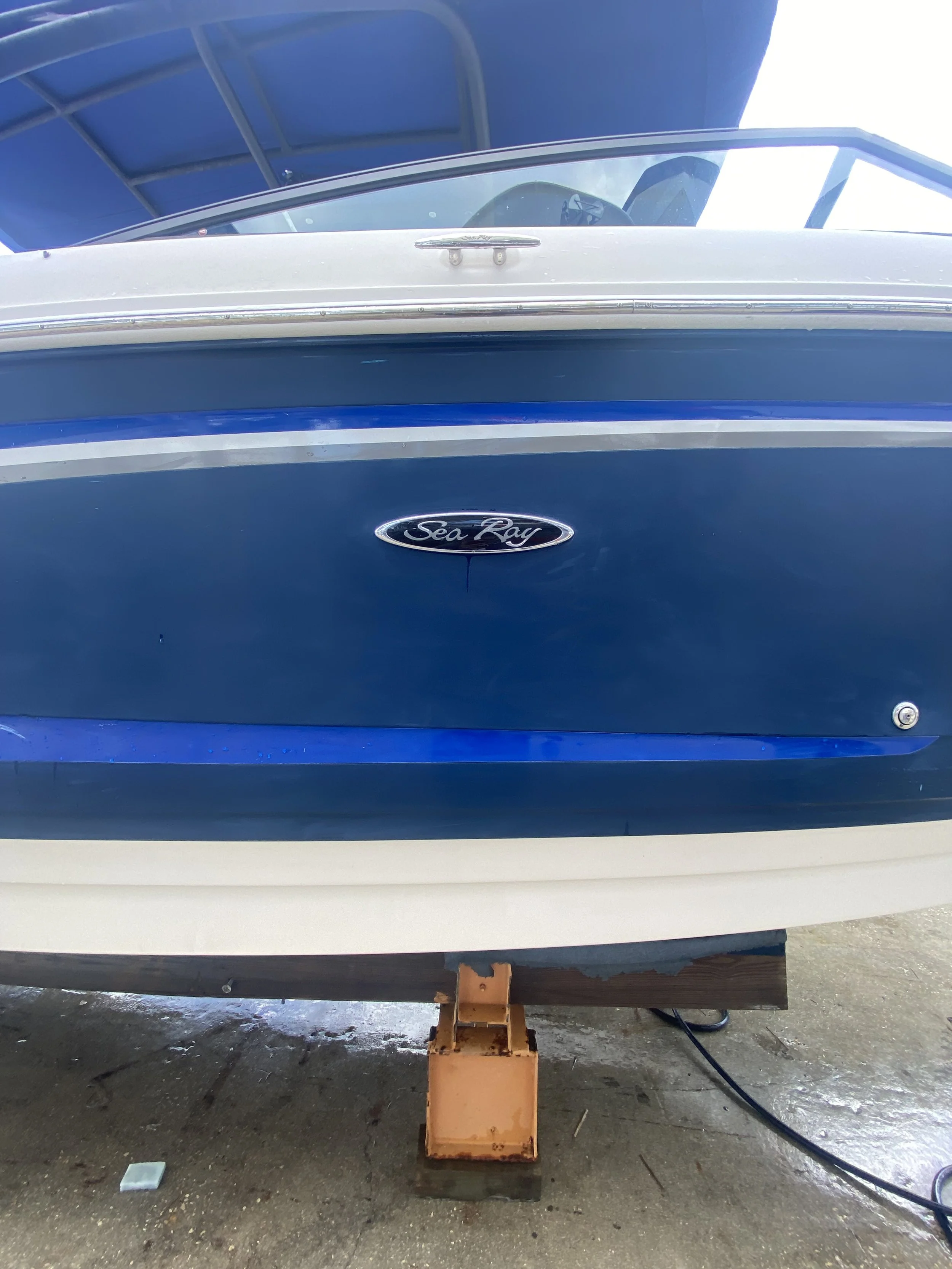
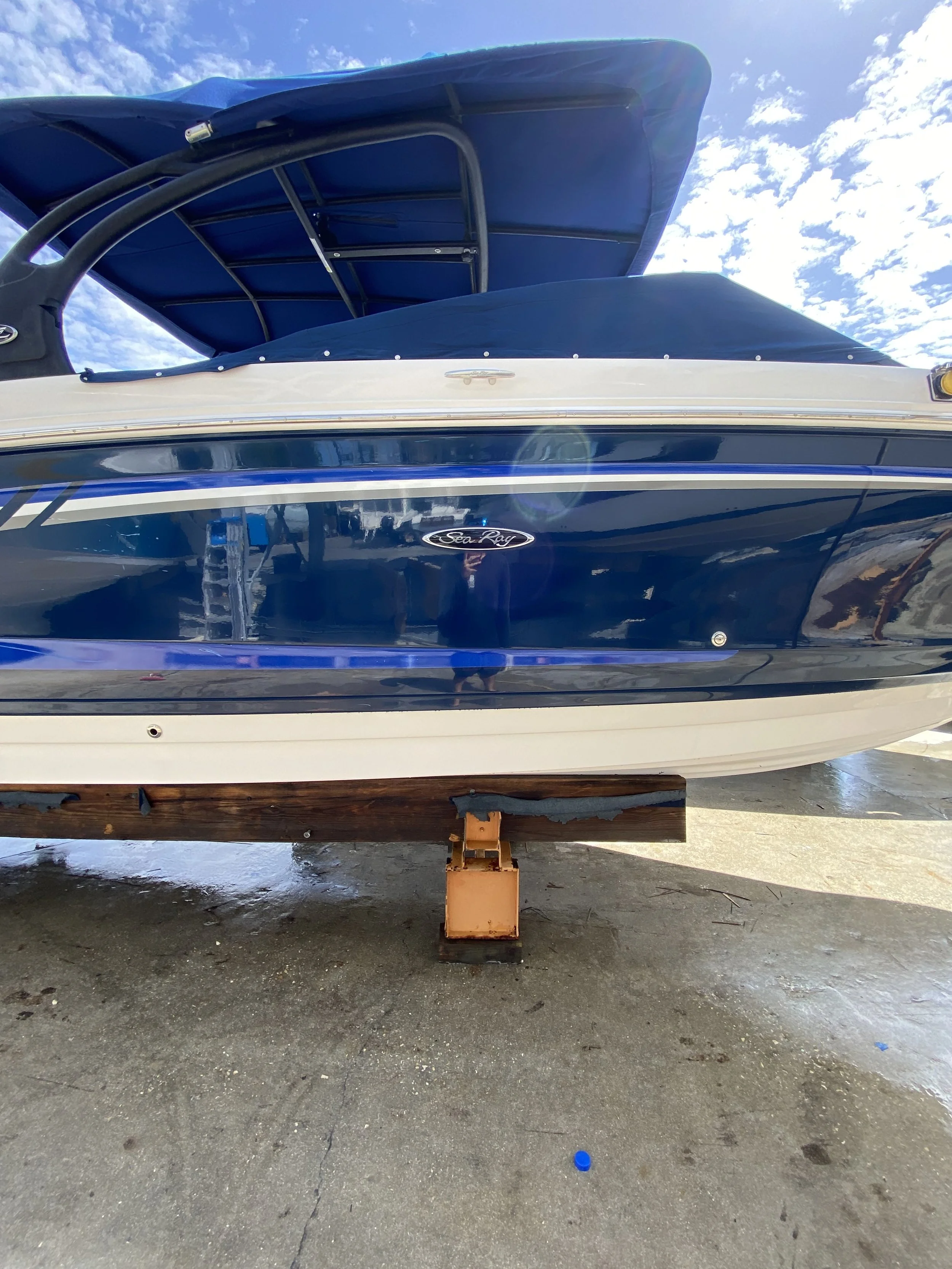
How do you fix oxidized gelcoat?
Oxidized gelcoat usually needs polishing or correction. The exact process depends on how severe the oxidation is. Light oxidation may improve with a lighter polish. Heavier oxidation may need a more aggressive correction process.
Step 1: Decontamination wash
Before polishing, the boat needs to be properly washed to remove salt, grime, dirt, and surface contaminants. Polishing a dirty surface is a mistake.
Step 2: Polishing or correction
Polishing helps remove oxidation and refine the surface. The goal is to improve gloss, clarity, and color. The worse the oxidation is, the more involved this step becomes.
Step 3: Protection
After the surface is improved, protection should be applied. This may be wax, sealant, ceramic wax, or ceramic application depending on the job and the owner’s goals.
Step 4: Maintenance washing
Once the boat is restored, regular washing matters. If the boat goes back to sitting dirty in salt and sun, the finish will start declining again.
Detail and polish the boat first, protect the surface, then keep it on a wash plan. That is a stronger strategy than waiting until the boat is neglected again.
Can wax fix oxidation?
Wax can improve appearance temporarily, but wax does not properly remove oxidation by itself. If the gelcoat is oxidized, the surface usually needs polishing before protection. Waxing over oxidation is like putting a clean shirt over a dirty surface. It may look better for a moment, but the underlying issue is still there.
Can ceramic coating fix oxidation?
No. Ceramic coating does not fix oxidation. Ceramic should be applied after the surface is cleaned, polished, and properly prepped. If ceramic is applied over dull or oxidized gelcoat, it will not magically create a flawless finish.
This is why surface prep matters so much. The final ceramic result depends heavily on what the surface looks like before the coating is applied.
Related boat care services
If your boat is already dull, chalky, or faded, start with detailing or polishing before thinking about a wash plan or ceramic application.
Boat Detailing
For dull, oxidized, stained, or neglected boats that need polishing and deeper work.
View Boat DetailingMarine Ceramic Application
For added slickness, gloss, and easier maintenance after proper surface prep.
View Ceramic ServiceBoat Wash Plans
For keeping a clean boat maintained after detailing or polishing is completed.
View Wash PlansCommon questions about boat oxidation in Miami
Why does boat gelcoat oxidize so fast in Miami?
Miami boats are exposed to intense sun, saltwater, humidity, rain, heat, and marine contaminants. That constant exposure can make gelcoat become dull, faded, chalky, or oxidized faster.
Can washing remove oxidation?
No. Washing removes salt, dirt, and surface grime. Oxidation usually requires polishing, correction, or detailing depending on severity.
Can wax fix oxidized gelcoat?
Wax can improve the look temporarily, but it does not properly remove oxidation. Oxidized gelcoat usually needs polishing before protection.
Can ceramic coating fix oxidation?
No. Ceramic coating does not fix oxidation. The surface should be cleaned, polished, and prepped before ceramic application.
How do I know if my boat needs polishing?
If the boat looks dull, chalky, faded, or does not shine after washing, it likely needs polishing or detailing instead of just another wash.
Is your boat starting to look dull or oxidized?
Send us your boat size, location, photos, and close-ups of the gelcoat. We will review the condition and recommend whether you need detailing, polishing, ceramic application, or a maintenance wash plan.
- Boat size and type
- Boat location
- Photos of the gelcoat
- Close-ups of dull or chalky areas
- Current maintenance routine
- Detailing or ceramic goals